
A Practical Guide for Security, Engineering, and Compliance Teams
Achieving FIPS validation is often viewed as a final checkpoint—something to address once development is complete. In practice, this mindset is one of the most common reasons organizations encounter delays, rework, and unexpected certification challenges.
FIPS validation is not simply a test passed at the end of development. It is a rigorous evaluation of cryptographic design, implementation, architecture, and documentation. Understanding how the process really works—and where projects often go wrong—can make the difference between a smooth validation and months of delay.
What FIPS Validation Really Involves
FIPS validation extends well beyond verifying that approved algorithms are present and functioning correctly. Validation laboratories assess the full lifecycle of the cryptographic module, including design decisions, cryptographic boundary enforcement, entropy sources, and supporting documentation.
A Familiar (and Risky) Project Pattern
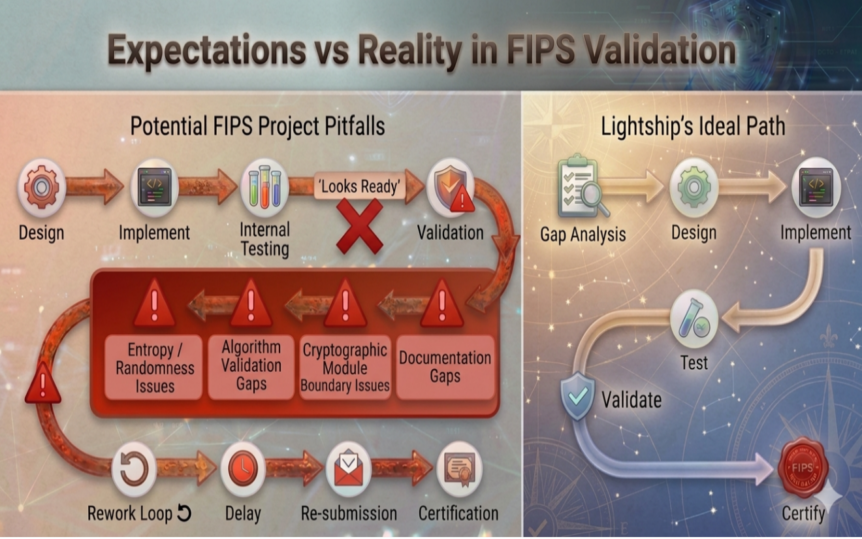
Many FIPS projects follow a predictable pattern: cryptographic algorithms are selected and integrated, internal testing passes, and teams feel ready for validation. However, when formal laboratory testing begins, issues such as unclear boundaries, incomplete algorithm coverage, or documentation gaps surface—often all at once.
Why Early Alignment Matters
Successful FIPS projects emphasize early and continuous alignment with validation requirements. Incorporating compliance considerations during design—rather than at the end—significantly reduces risk.
Strategies to Avoid FIPS Validation Pitfalls
Organizations that consistently achieve timely validation adopt a proactive approach, including early gap analysis, document maintenance, upfront cryptographic boundary definition, and early entropy validation.
How Lightship Security Can Help
FIPS validation does not need to be unpredictable or disruptive. Lightship Security helps organizations navigate FIPS 140-3 validations by identifying risks early and aligning implementation, architecture, and documentation before they become blockers.
Lightship Security services include:
- Pre-validation gap analysis to identify readiness issues
- Cryptographic boundary and module design reviews
- Vendor Evidence (VE) and documentation support
- Ongoing advisory services throughout the validation lifecycle
If you are planning a FIPS validation or addressing challenges in an active project, contact Lightship Security to begin with a focused gap analysis and build a smoother path to certification.
Final Thoughts
FIPS validation success is determined long before formal testing begins. Early planning, strong cross-functional communication, and expert guidance can significantly reduce delays and improve outcomes.
Contact us to tailor your FIPS validation strategy.